 LJ writes: "What is the difference between yoga exercises and secular isometric exercises, and why do so many of them look exactly alike? It's very confusing for those of us who want the health benefits of yoga but without the religious baggage."
 Great question!
The good news is that the isometric exercise, stretching, balance training and strengthening exercises found in a typical yoga routine are available through entirely secular fitness routines. This is because some of the postures associated with modern postural yoga have parallels in Western gymnastics, physical culture, and military calisthenics.
The best way to explain the relationship between isometric exercise and yoga is to start with a basic understanding of isometric exercise.
“Isometric exercises, also known as static strength training, involve muscular actions in which the length of the muscle does not change and there is no visible movement at the joint,” Sports Fitness Advisor explains. “Isometric exercises can be used for general strength conditioning and for rehabilitation where strengthening the muscles without placing undue stress on the joint is warranted.”
Isometric exercises can be completed with submaximal muscle action – such as holding a weight steady, overhead or out to the side. They can also be completed with maximal muscle action which results when we push against an immoveable object such as a wall or heavy weight. In either case, isometric exercises involve resistance of some form which can include the body's own structure, objects such as walls or fences, free weights, weight machines or elastic bands.
So how does this compare to yoga?
 Yoga is actually a type of isometric exercise which involves certain body positions that are held in a static position. Pilates would be another example of isometric exercise, as would certain weightlifting moves.
When we look at the history of isometric exercise, which is also called “self-resistance” exercise, we find various forms in use dating back to ancient times. The Greeks called it “soft exercise.” In the Orient, it was practiced in the martial arts and in yoga where it manifested as static body positions designed to worship Hindu gods or the animals they were often depicted with.
This shared history may at least partially explain why so many isometric and yoga moves appear to be similar.
In his book Yoga Body: The Origins of Modern Posture Practice, published by Oxford University Press in 2010, yoga scholar Mark Singleton documents the substantial influence of Western gymnastics, bodybuilding, and physical culture on the development of modern postural yoga.
During the nineteenth and early twentieth centuries, European gymnastics and physical-training systems were introduced into India. These systems eventually influenced the development of the exercise-oriented yoga that became popular around the world.
This doesn't mean that all yoga postures were invented by Western gymnasts. Yoga had its own premodern postural traditions. The evidence supports substantial borrowing, adaptation, and blending, not the claim that all yoga postures originated in gymnastics.
For example, one move, commonly known as the plank, is performed by holding the body in a horizontal position to the ground which provides an excellent core workout. It may look exactly like the yoga pose but this is because there are only so many ways the body can move to strengthen the core.
For the same reason, some versions of the squat can appear very similar to yoga’s chair pose.
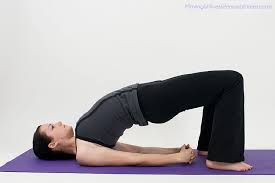
A very common glut-toning exercise that involves lifting the hips off the floor and holding tightened glut muscles is almost exactly like the yoga pose known as the bridge.
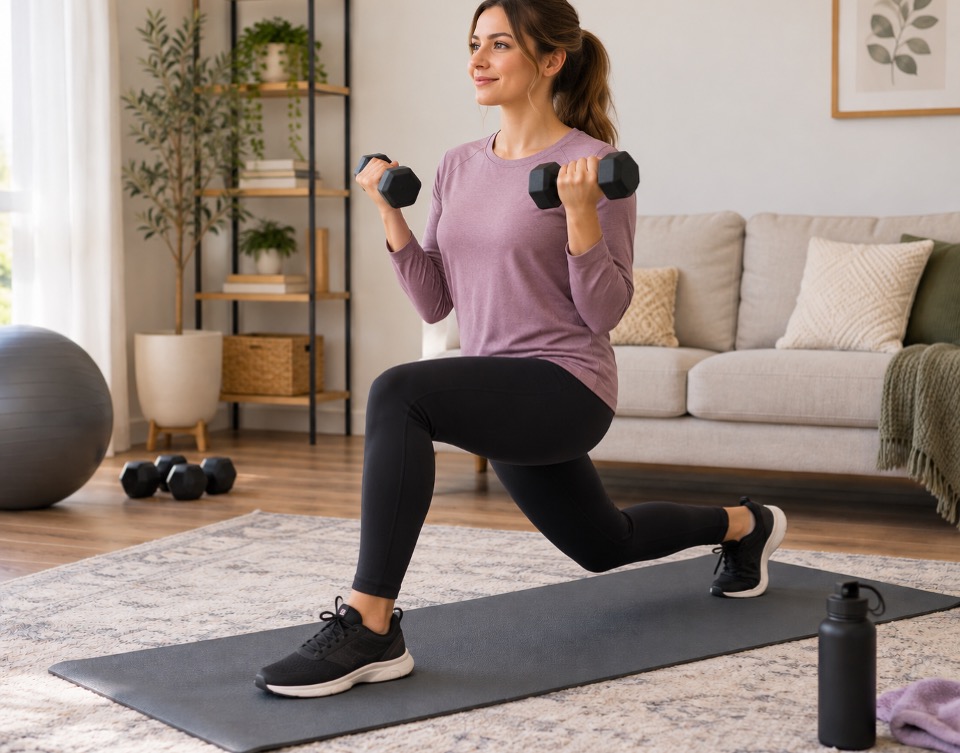
Another isometric favorite, the forward lunge, can also bear a resemblance to yoga’s warrior pose. Again, this is because the body can only move in so many directions so there is bound to be overlap.
For good reason, some Catholics worry that performing an exercise that resembles a yoga posture might inadvertently involve them in yoga. But there's an important distinction between performing an ordinary physical exercise and participating in a practice that incorporates religious or spiritual elements.
Just as the act of wearing yoga pants doesn't mean you're doing anything other than wearing stretch pants, holding a plank to strengthen your abdominal muscles doesn't automatically make that exercise a religious practice. However, this doesn't mean we should ignore the spiritual context in which an exercise is being performed.
A conventional fitness class that incorporates planks, squats, and lunges is not necessarily equivalent to a yoga class that would include Hindu religious invocations, mantras, or other spiritual practices. However, even if it did, and a participant has no intention of engaging in those practices, Catholics still need to exercise discernment about the religious activities taking place around them.
The Church has cautioned against confusing Christian spirituality with religious practices drawn from other traditions. This is why Catholics should understand what is being taught in a class rather than assuming that every activity marketed as fitness is necessarily devoid of spiritual content. Likewise, Jesus Christ, the Bearer of the Water of Life (2003) cautions that Christians can become involved in religious practices without fully recognizing their religious significance.
It should also be noted that even if a yoga instructor does not incorporate spiritual aspects of yoga into the class, other participants might choose to do so on their own. Because this may mean invoking the false gods of Hinduism, who are actually demons, this activity could invite spiritual danger upon all present in the class.
But none of this means we need to become fearful of ordinary exercise! For those who don't want to practice yoga, the good news is that you don't need yoga in order to get a good isometric workout. People have been getting exceptional isometric workouts for general health and/or for therapeutic purposes long before today's yoga craze came about.
Click here for several essential isometric moves that are totally yoga-free. Similar information is provided in the library maintained by the American Council on Exercise.
© All Rights Reserved, Living His Life Abundantly®/Women of Grace® http://www.womenofgrace.com
Send your New Age questions to newage@womenofgrace.com