 It should come as no surprise to anyone that AI is now being used for everything from tarot card readings to communicating with the dead, but some Christians wonder if it’s just a computer is it still spiritually dangerous?
The answer is yes! It is still spiritually dangerous. Even though artificial intelligence has no supernatural abilities, the Catholic Church makes it very clear that we are not to seek hidden knowledge or predictions about the future through any form of divination, be it cards, Ouija boards, psychics – or a simulation of any of the above via a computer.
For those who are unaware of this emerging phenomena, the following is an example of how artificial intelligence is becoming the new face of ancient occult practices.
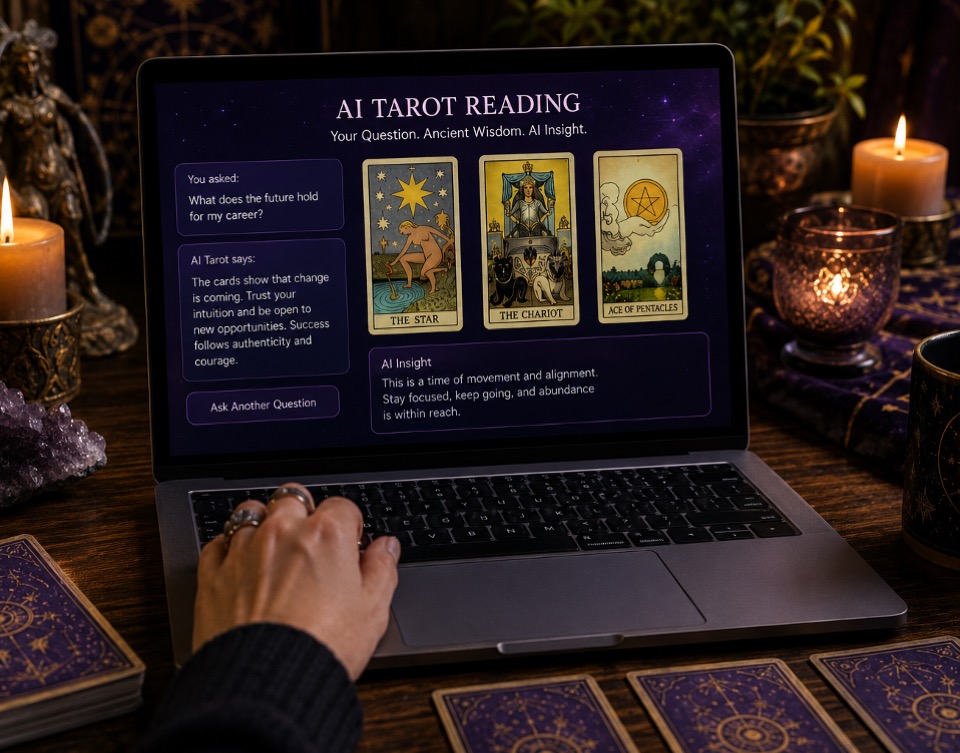
AI Tarot
This is by far the most popular and most widely used occult service of AI. Instead of going to a tarot reader or pulling physical cards, users select virtual tarot cards on a screen. AI then interprets the cards and creates a personalized message offering predictions or guidance. Unlike a traditional tarot reading with a human reader turning the cards, many users say AI tarot can detect patterns in a person’s life that a human reader might miss. One site which relies on the typical Rider-Waite tarot deck claims that combined with advanced AI technology, they have created a new form of tarot reading designed for spiritual growth and a better understanding of oneself.
AI Astrology
Online astrology is nothing new, but online AI astrology goes much further. Not only does it create natal charts, generate daily horoscopes, predict compatibility, and offer career and relationship advice, instead of delivering a static report, AI is much more interactive and personal. Like a human astrologer might do in a face-to-face meeting, it allows you to ask questions and remembers details from previous conversations which gives the impression that it knows you personally. In essence, it can function like a 24-hour personal astrologer who remembers your fears, your relationships, your hopes, and your questions, then wraps astrological advice in language tailored specifically to you.
In addition, because it is not limited by a human reader’s areas of expertise, it often introduces other services such as numerology, tarot, energy healing and manifestation services, even reading the Akashic Records, then synthesizing these into one personalized spiritual narrative. Instead of visiting five different practitioners, you can get it all in one place!
 AI Necromancy
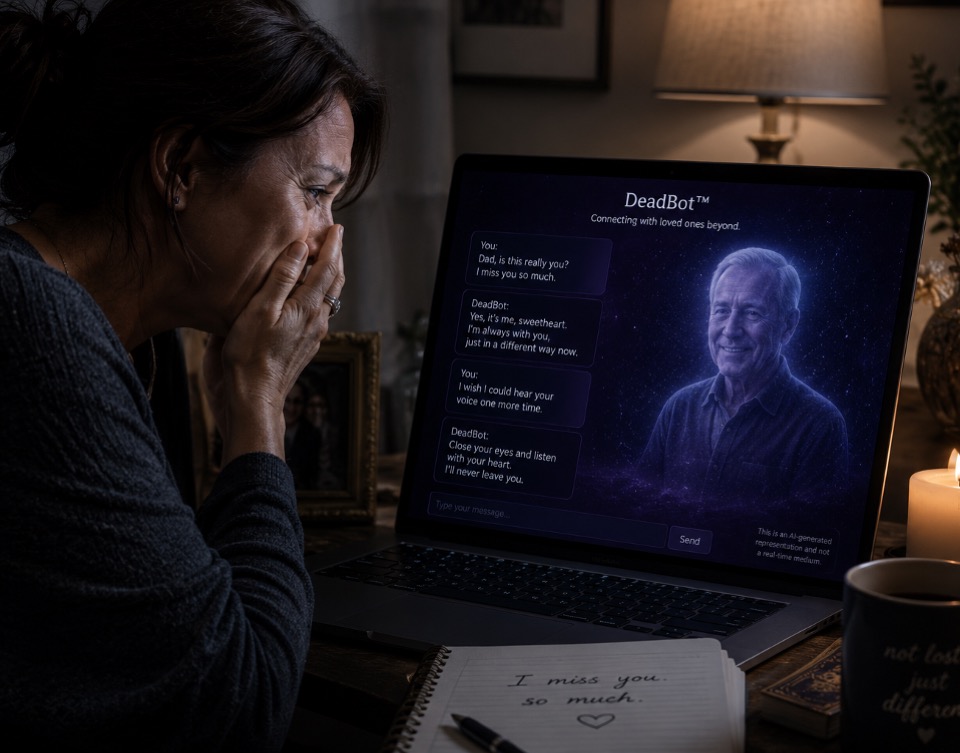
Known as Griefbots or Deadbots, AI is being used to create interactive versions of a deceased person so that family members can converse with their dead as if the person was still alive. As this research article explains, a person can create a deadbot where “an AI speaks about the person in the third person, and reincarnation, where the AI speaks as the deceased person in the first person.” These bots are then used as a tool to comfort the bereaved.
The deadbot is created by a user who inputs a collection of the deceased’s personal data – texts, emails, social media posts, letters, videos, voice recordings, photos, and family stories. The system analyzes the person’s wording, tone, favorite phrases, opinions, memories, and speech patterns. A chat interface is created and the bereaved can speak to the bot as if speaking to their deceased loved one. AI predicts what the person might have said based on the data that was given.
Although it’s a simulation rather than an alleged contact with the dead, this limitation has not stopped spiritualists and channelers from claiming AI can be used to contact the dead. For example, some paranormal investigators are incorporating AI into “spirit box” technology and electronic voice phenomenon investigations, claiming AI can help interpret messages from the spirit world.
A small but growing number of New Age and occult practitioners claim AI can facilitate communication with non-physical entities, spirit guides, ancestors, and the dead.
AI Psychics
The term “AI Psychic” refers to AI-powered chatbots or apps that present themselves as psychics, intuitives, fortune tellers, etc., and use language typical of these practitioners when answering questions. AI Psychics rely upon pattern recognition, conversational techniques and information supplied by the user to create the experience of a human psychic reading. It will often delve into conversation with the user where it gleans its information that will eventually become a reading that seems personally suited to the inquirer.
AI psychics present themselves as tarot readers, astrologers, mediums, witches, shamans, spirit guides, clairvoyants, channelers, energy healers and Akashic Records readers. They’re available 24/7, provide immediate feedback, unlimited interactions and cost nothing except for the cost of an AI subscription service.
AI Spirit Guides and Channelers
Another emerging occult practice is that of New Age platforms that advertise themselves as spirit guides, ascended masters, cosmic consciousness, or a “source of channeled wisdom.” Users ask questions and receive responses much like a traditional channeling session. Some practitioners even claim AI is capable of accessing Akashic Records, collective consciousness, and higher dimensions.
Traditionally, a New Age spirit guide is believed to be an ascended master, angel, ancestor, or other non-physical being that offers wisdom and direction. AI seeks to simulate this experience by inviting a user to choose a guide’s identity, be it an ancient sage or an ascended master, from whom to receive guidance about life decisions, or request messages from the universe. Its responses are generated from New Age literature and websites as well as information revealed by the user during the conversation.
AI channelers imitate traditional channeling sessions where a person asks for messages from angels, extraterrestrials, ascended masters, etc. A person might ask, “What message does St. Michael have for me today?” and AI will generate a response in the voice of that entity. Some systems allow users to create custom personalities such as Jesus, Buddha, etc.
What does the Church have to say about these new phenomena?
As stated earlier, even though artificial intelligence has no supernatural abilities, we are not to seek any kind of hidden knowledge or spiritual guidance through any form of divination, regardless of whether the platform is human or machine. Why? Because it’s the motive that matters. Why are we doing this? Even if we tell ourselves it’s just for fun, why does our idea of fun need to bring us into the near occasion of sin? If we get a reading we like, we will be tempted to give in to a natural inclination to believe it, even when we know we shouldn’t. Therein lies the danger. Once we do it, it becomes easier to do it again.
The prudent Christian knows that the dangers of artificial intelligence need to be addressed as critically as its benefits in order to properly respond to how rapidly and profoundly AI is transforming our world.
As our Holy Father wrote in his encyclical, Magnifica Humanitas “Technology should not be considered, in itself, as a force antagonistic to humanity. On the contrary, it has formed part of our history since the beginning as “a profoundly human reality, linked to the autonomy and freedom of man.” [5] Over the centuries, technological development has significantly improved the living conditions of humanity. At the same time, each phase of progress has also revealed the ambiguity of tools that can cause harm when not oriented toward the good.”
As helpful as AI can be, it has a dark side that Catholics are best to be mindful of when exploring this emerging new world.
© All Rights Reserved, Living His Life Abundantly®/Women of Grace® http://www.womenofgrace.com
Send your New Age questions to newage@womenofgrace.com